

Category: Fertilizers | Reading Time: 7 Mins
When choosing nitrogen fertilizers for optimal crop yield, understanding the debate of Prilled vs Granular Urea is critical for importers and farmers alike. Urea N46% is the world’s most widely used nitrogen fertilizer, but not all urea is created equal. The physical form of the product—whether prilled or granular—affects storage, application, and ultimately, the price.
In this ultimate guide for 2026, Petroneo breaks down the 5 essential differences between these two types, supported by technical data and logistical insights. Whether you are in Brazil, India, or Turkey, knowing these differences will save you money on your next import.
Table of Contents
In 2025, choosing between prilled and granular urea has become more strategic than ever, as rising fertilizer costs, stricter environmental regulations, and advanced application technologies push buyers toward higher efficiency products. Understanding how particle size, handling behavior, and application performance affect nitrogen efficiency allows farmers and traders to reduce losses, optimize logistics, and improve overall crop productivity in a competitive global market.
1. What is Prilled vs Granular Urea?
Both types are chemically identical with the formula CO(NH₂)₂ and contain a minimum of 46% Nitrogen. However, the Prilled vs Granular Urea distinction lies in their physical size and hardness.
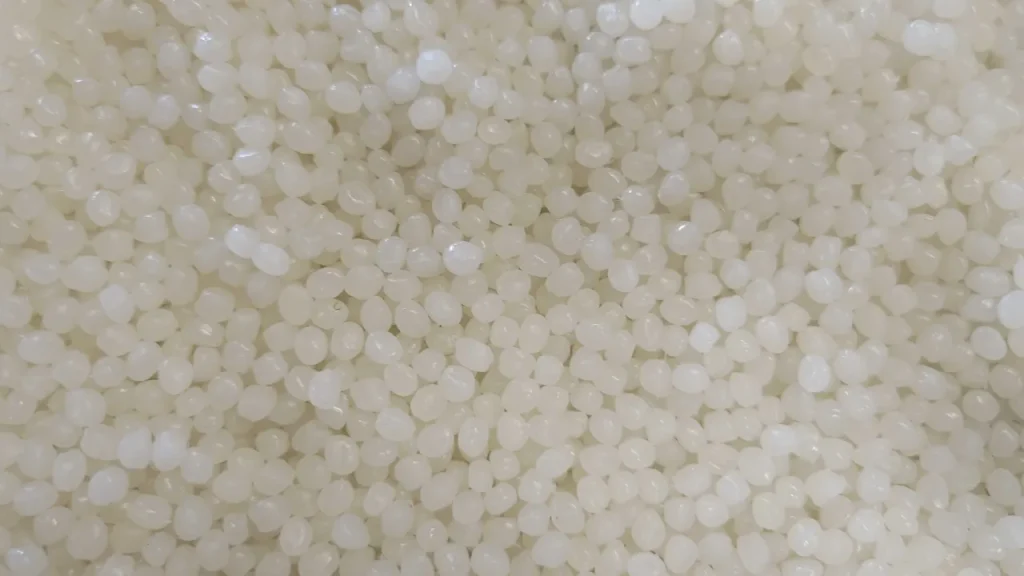
Prilled Urea consists of small, spherical beads. It has been the traditional form of urea for decades. It is generally softer and dissolves rapidly in water.
Granular Urea consists of larger, harder granules. It is becoming the industry standard for large-scale mechanized farming due to its resistance to crushing. According to the International Fertilizer Association (IFA), demand for granular urea has surpassed prilled in developed agricultural markets.
2. Manufacturing Process Differences
The core difference in Prilled vs Granular Urea starts at the petrochemical plant.
Prilling Process
Molten urea is sprayed from the top of a tall “prilling tower.” As the droplets fall through an upward stream of air, they cool and solidify into small beads. This process is simpler but results in a product with lower crushing strength.
Granulation Process
Liquid urea is sprayed onto small “seed” particles inside a rotating drum or fluid bed. The granule grows in layers (like an onion) and is often coated with formaldehyde to increase hardness. This makes Granular Urea superior for bulk handling.
3. Technical Specs & Hardness
When comparing Prilled vs Granular Urea, the technical data sheet (TDS) reveals why Granular is preferred for export.
| Property | Prilled Urea | Granular Urea |
|---|---|---|
| Nitrogen | 46% Min | 46% Min |
| Particle Size | 1.0 – 2.4 mm | 2.0 – 4.0 mm |
| Moisture | 0.5% Max | 0.5% Max |
| Biuret | 1.0% Max | 1.0% Max |
| Crushing Strength | ~1.5 kg per granule | ~3.5 kg per granule |

In 2025, the decision between prilled urea and granular urea plays a critical role in fertilizer efficiency, application accuracy, and supply chain performance. With increasing focus on sustainable agriculture, precision spreading, and export-quality fertilizers, understanding the differences in particle size, handling characteristics, and nitrogen release helps farmers, distributors, and traders choose the most suitable urea type. Selecting the right urea form not only reduces nitrogen loss and logistics costs but also improves crop yield and long-term soil performance in modern farming systems
4. Agricultural Application: Which is Better?
Choosing between Prilled vs Granular Urea depends on your farming equipment.
- Granular Urea: Essential for bulk blending (NPK mixing). Since its size matches DAP and MAP granules, it mixes evenly without segregation. It is also harder, meaning it won’t turn to dust when shot from mechanical spreaders.
- Prilled Urea: Better for pasture renovation or manual spreading. Its small size allows it to settle quickly into the grass, reducing ammonia volatilization. It is also excellent for dissolving into liquid fertilizers.
5. Price Analysis 2026
Typically, Prilled Urea trades at a slight discount (approx. $5-$10 USD/MT lower) compared to Granular Urea due to lower production costs. However, logistics can change this equation. Granular Urea has lower losses during shipping (less dust), which often makes it cheaper on a “landed cost” basis.
At Petroneo, we supply both grades from premium producers in the Middle East. Whether you need Prilled vs Granular Urea, we guarantee quality inspections by SGS or Geo-Chem.
)